Fallston gives these insects everything they want. Wooded lots along the Winters Run corridor and the Little Gunpowder Falls edge put boxelder, maple and ash seed trees within flight distance of the house, and boxelder…
Fallston gives these insects everything they want. Wooded lots along the Winters Run corridor and the Little Gunpowder Falls edge put boxelder, maple and ash seed trees within flight distance of the house, and boxelder bugs feed on those seeds all summer before moving to whatever wall holds the most afternoon heat. Brown marmorated stink bugs do the same thing from field edges and treelines around Upper Crossroads and Carrs Mill. On a sunny October afternoon you can stand at the southwest corner of a two-story colonial in Vale or Laurel Brook and count dozens of them stacked on the siding above the second-floor windows — that is the wall that decides whether they get in.
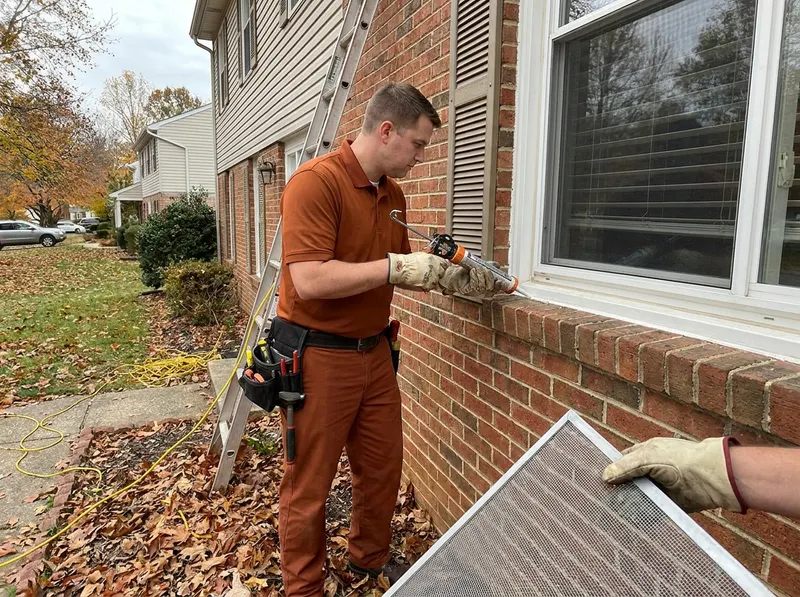
The entry points are boring and repeatable, which is what makes exclusion worth paying for. On 1970s–90s subdivision homes we most often seal behind loose vinyl J-channel and siding corner posts, gaps at the top of window and door casings, unscreened or torn attic gable vents, soffit seams, and the sloppy holes cut for dryer vents, cable and outdoor outlets. On the older farmhouse stock around Pleasantville and Trappe Church Road, it is more often storm-window frames, gaps at settled sill plates and stone-to-frame joints. Brick homes near the Route 152 and Route 1 crossroads in Fallston village center hold heat late into the evening, so weep holes and window head joints get attention there.
When a spray-only visit is the right call: you found bugs late in October, you rent, or you are selling in spring and want the population knocked down for one season. A well-timed exterior residual on the sunny walls does real work — but it wears, and it does nothing about the hole. When full exclusion is the right call: this is the third or fourth fall in a row, you are vacuuming bugs off window sills in February, or you already know your gable vents are open. Sealing an opening is permanent; a spray is seasonal. The trade-off is honest — exclusion costs more up front and takes longer on site, especially on a two-story with high gables.
One thing we will tell you before you spend money: indoor fogging or spraying wall voids for overwintering stink bugs is not effective and is not something we recommend. Bugs already tucked into a wall or attic in November will trickle out on warm days regardless. Vacuum them, don't spray them indoors — a shop vac with a knee-high stocking in the hose keeps the odor out of the canister. Anything we apply outdoors is applied to siding, trim and vents, which matters on Fallston's well-and-septic properties; we keep product off soil, gardens and downspout outfalls, and we'll walk your dog's run and your beds with you before we start. No annual contract is required for a fall exclusion visit.
Every job gets a firm, written price after a free on-site visit.
Tell us about your stink bug and boxelder bug fall exclusion job in Fallston and we'll send a clear, written quote — usually the same day.
 Pestiqra Pest Control